
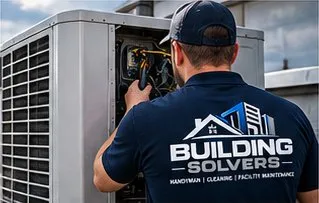
Rooftop units heat and cool most small and mid-size commercial buildings, and because they’re out of sight, they’re easy to forget until one stops. Dust, wind and big temperature swings are hard on them. A simple checklist keeps them running.
Before you go up
- Use safe roof access: a secured ladder or hatch, and stay clear of roof edges and skylights.
- Turn off the unit at its disconnect before opening panels.
- Bring the right filters, a flashlight, a rag, and a notebook or phone for the log.
Monthly
- Check the filters. Replace them when they’re loaded with dust. Write the date on the frame.
- Listen and look: unusual noise, vibration or a fan that won’t start.
- Clear debris around the unit: leaves, trash, anything blown in.
- Check the condensate drain is running and not clogged.
- Confirm the thermostat schedule matches the building’s hours.
Quarterly
- Inspect belts for cracks, glazing and tension. Replace worn belts.
- Look at the coils: dirty condenser coils make the unit work harder. Rinse gently or schedule a cleaning.
- Check access panels are present and secured. Loose panels let in weather and rattle in wind.
- Look for rust, oil stains and signs of water getting into the unit.
- Check the roof around the unit: the curb flashing, ponding water and cracked roofing.
Before cooling season (spring)
- New filters
- Clean condenser coils
- Clear and flush the condensate drain and pan
- Check belts and fan operation
- Run the unit in cooling and confirm cold air at the supply vents
- Start up evaporative coolers if the building has them
Before heating season (fall)
- New filters
- Run the unit in heating and confirm warm air at the supply vents
- Check that the area around the unit is clear for winter
- Make sure the roof drains around the unit are clear before snow
- Shut down, drain and cover evaporative coolers
- See the full winterizing checklist
Leave these to a licensed HVAC tech
- Refrigerant charge and leaks
- Gas valves, burners and heat exchangers
- Electrical components and controls
- Compressor problems
If you find any of these, note it and call it in rather than working on it.
Keep a log
For each unit, record the date, filter size and change, belt condition, anything found and what was done. Over time the log shows which unit needs attention most, and helps when it’s time to budget for replacement.
Put it on a schedule
Our facility maintenance crew handles filters, belts, coil cleaning, drains and seasonal checks on a set schedule, keeps the log, and coordinates licensed HVAC work when it’s needed. Request HVAC upkeep or see facility maintenance in Twin Falls.